
About TMBIO

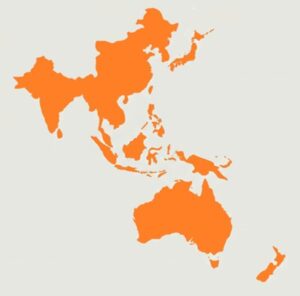
Founded in 2024, TMBIO is a dedicated distributor of cutting-edge life science products to research and academic communities across the Asia Pacific region. We specialize in distributing innovative products that require in-depth explanation and technical expertise to ensure optimal utilization by our customers.

Our Mission

To empower scientific discovery and advancement in the Asia Pacific region by providing access to  high-quality, innovative life science solutions. We strive to be the preferred partner for manufacturers seeking to expand their market share in this dynamic region.

Our Approach

  • Direct & Partner Distribution: We offer flexible distribution models, including direct sales and strategic partnerships with local distributors, to ensure optimal market reach and customer support.
  • Application Focus: We actively identify and engage with potential customers based on the specific applications of our products and the unique value they bring to their research.
  • Technical Expertise: Our team possesses in-depth knowledge of the life science industry and the products we represent. We provide comprehensive technical support, training, and demonstrations to ensure customer success.
  • Building Strong Relationships: We prioritize building long-term, mutually beneficial relationships with both our customers and our manufacturing partners.

Partnering with TMBIO

If you are a manufacturer of innovative life science products seeking a dedicated and results-oriented partner in the Asia Pacific region, we invite you to explore collaboration opportunities with TMBIO.

Contact Us

We welcome inquiries from potential customers and partners. Please contact us to learn more about our product portfolio, distribution capabilities, and how we can support your scientific endeavors.

Contact Us

Electrophoresis

Building on decades of established electrophoresis expertise, techniques like isoelectric focusing, SDS-PAGE, and 2D gel electrophoresis remain powerful tools for protein and nucleic acid analysis. SERVA Electrophoresis GmbH, our partner, has revolutionized flatbed electrophoresis with the HPE™ BlueHorizon™. This system delivers unmatched reproducibility and high-resolution separations, offering various configurations to meet your specific needs. Looking to upgrade or replace older instruments like the Multiphor? The HPE™ BlueHorizon™ is the ideal solution. Explore our comprehensive portfolio of ampholytes, buffers, reagents, markers, and electrophoresis gels (agarose, acrylamide, and precast gels) to complete your workflow.
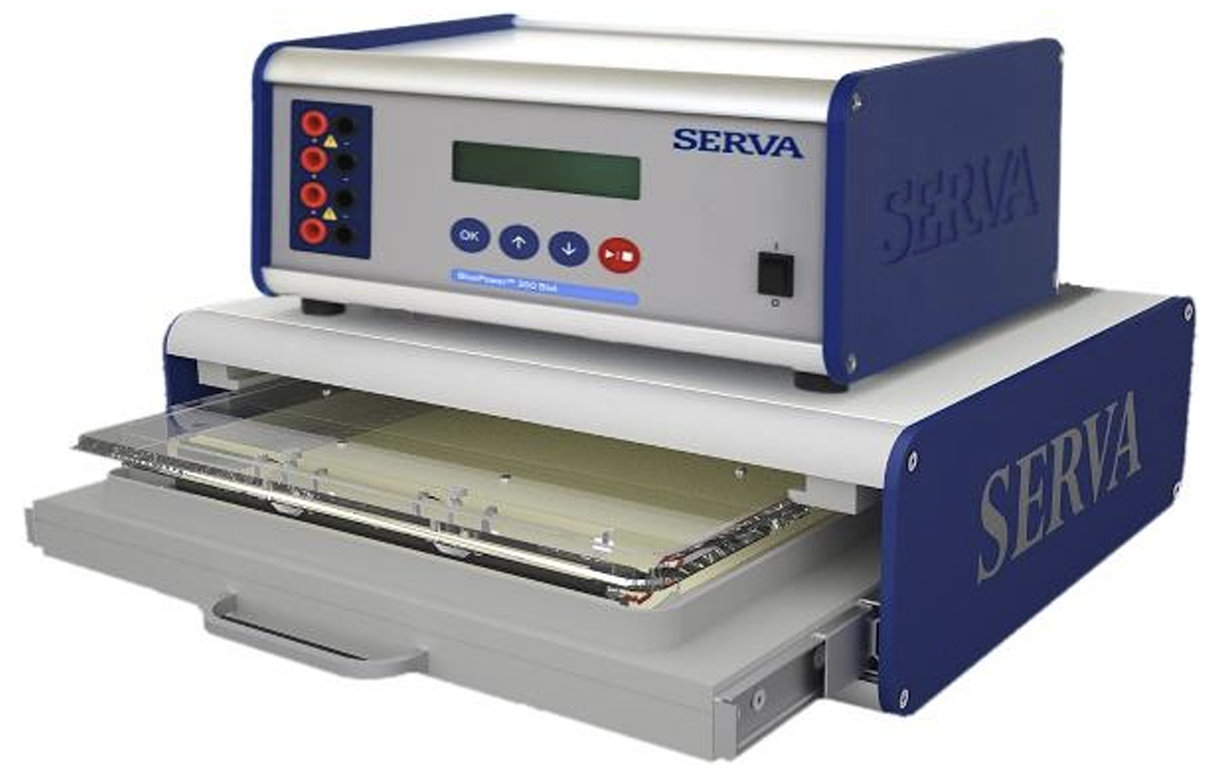
Horizontal flatbed electrophoresis (HPE), particularly the HPE™ BlueHorizon™, offers several advantages over other electrophoresis techniques. Its versatility allows use with:

Isoelectric Focusing (IEF) is valuable technique with a wide range of applications in protein analysis. The ability to separate proteins with high resolution based on their pI makes it an indispensable tool for researchers in many fields. This high resolution even allows for the separation of protein isoforms, which are variants of the same protein that differ in their post-translational modifications (e.g., phosphorylation, glycosylation)

SDS-PAGE (Sodium Dodecyl Sulfate-Polyacrylamide Gel Electrophoresis) is a powerful technique used to separate proteins based on their molecular weight.

2D-PAGE represents the combination of both technologies, Isoelectric Focusing (IEF) and SDS-PAGE. In this technique, proteins are first separated by IEF based on their pI, and then further separated by SDS-PAGE based on their molecular weight. 2D-PAGE provides a highly complex and informative separation of proteins, allowing for the identification and analysis of thousands of proteins in a single sample. It can also be used as preparative techniques for protein purification enabling the isolation of individual proteins or protein fractions from complex mixtures. These purified proteins can then be further analyzed using other techniques such as mass spectrometry or N-terminal sequencing to determine their identity, structure, and function.

HPE System >>
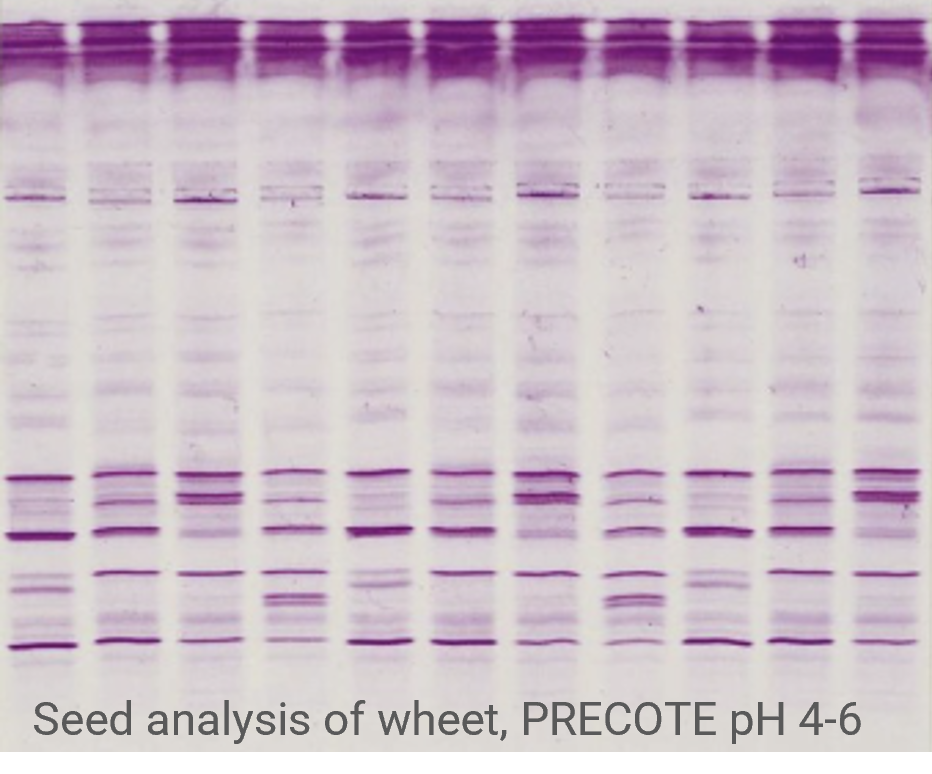
Seed, Cultivar, Plant Differentiation: 2D electrophoresis can be a powerful tool for seed analysis, providing valuable information about cultivar differentiation, genetic modification, stress responses, and seed quality.

  • Unique Protein Patterns: 2D electrophoresis separates plant proteins, revealing unique patterns for each cultivar. This helps identify markers for cultivar distinction and assess seed lot purity.
  • Detection of Genetic Modifications: 2D electrophoresis can detect and monitor the expression of transgenic proteins in genetically modified plants
  • Stress Response Analysis: 2D electrophoresis helps identify proteins that change in response to environmental stress, aiding in the development of stress-tolerant plant cultivars.
  • Seed Quality Assessment: 2D electrophoresis can monitor the degradation of seed storage proteins during germination, helping to assess seed quality.

Discriminating protein sources: The differential glycosylation profiles of proteins from diverse origins, including different species or production methods (native vs. recombinant), can be leveraged for their separation and identification via IEF. Typical applications are the differentiation of Native and Recombinant EPO. Both endogenous and recombinant EPO exhibit different isoelectric points due to differences in their glycosylation. Therefore, even slight differences in the glycosylation of EPO molecules may become apparent.

Proteomics: 2D-PAGE, combining IEF and SDS-PAGE, allows for the separation and visualization of thousands of proteins in a single sample, providing a comprehensive overview of the proteome. 2D-PAGE gels can be used to identify and characterize specific proteins of interest. Individual protein spots can be excised from the gel, digested with enzymes, and analyzed by mass spectrometry to determine their identity and sequence.

Disease biomarker discovery: 2D-PAGE can be used to identify changes in protein expression patterns associated with various diseases, such as cancer, neurodegenerative disorders, and infectious diseases. Examples include

  • Thalassemia, an inherited condition that results in the reduced production of hemoglobin, the protein that enables red blood cells to transport oxygen. This deficiency can cause anemia, leading to symptoms like fatigue.
  • Multiple Sclerosis (MS) Diagnosing MS can be challenging as there is no single definitive test. It often involves a combination of clinical evaluation, medical history, and various diagnostic tests. One involves Lumbar Puncture (Spinal Tap). A small sample of cerebrospinal fluid (CSF) is collected from the spinal canal. Analysis of the CSF can reveal the presence of oligoclonal bands, which are specific proteins often found in people with MS.

Drug Discovery: 2D-PAGE plays a crucial role in drug discovery by enabling the identification of potential drug targets and assessing the efficacy and safety of drug candidates.

  • Target identification: 2D-PAGE can be used to identify proteins that are differentially expressed in diseased versus healthy cells or tissues, which can provide insights into potential drug targets.
  • Drug efficacy and toxicity assessment: 2D-PAGE can be used to monitor changes in protein expression in response to drug treatment, allowing for the assessment of drug efficacy and potential side effects.

Food Analysis:

  • Food quality control: 2D-PAGE can be used to analyze the protein composition of food products to detect adulteration, identify allergens, and assess food quality.
  • Food safety: 2D-PAGE can be used to identify and quantify the presence of toxins and contaminants in food.

Environmental Monitoring: Pollutant detection: 2D-PAGE can be used to analyze protein expression patterns in organisms exposed to environmental pollutants, providing insights into the impact of pollution on ecosystems.

Protein Characterization: Determining Protein pI and size are crucial pieces of information for protein identification and characterization. Changes in Post-Translational Modifications can be detected using IEF. This information can provide insights into protein function and regulation. SDS-PAGE can be used to detect changes in protein size. Additionally, it can be used to identify and compare protein expression patterns in different samples as well as to determine the purity of protein samples.

Contact us to understand how HPE™ BlueHorizon™ can improve your electrophoresis

High Performance Electrophoresis with HPE™ BlueHorizon™

Horizontal flatbed electrophoresis (HPE), particularly the HPE™ BlueHorizon™, offers several advantages over other electrophoresis techniques. Its versatility allows use with:

  • IEF gels and strips
  • SDS and native PAGE gels of varying sizes
  • Highly reproducible 2D gels, simplifying analysis and reducing the need for complex software
  • Gels up to 260 mm x 205 mm

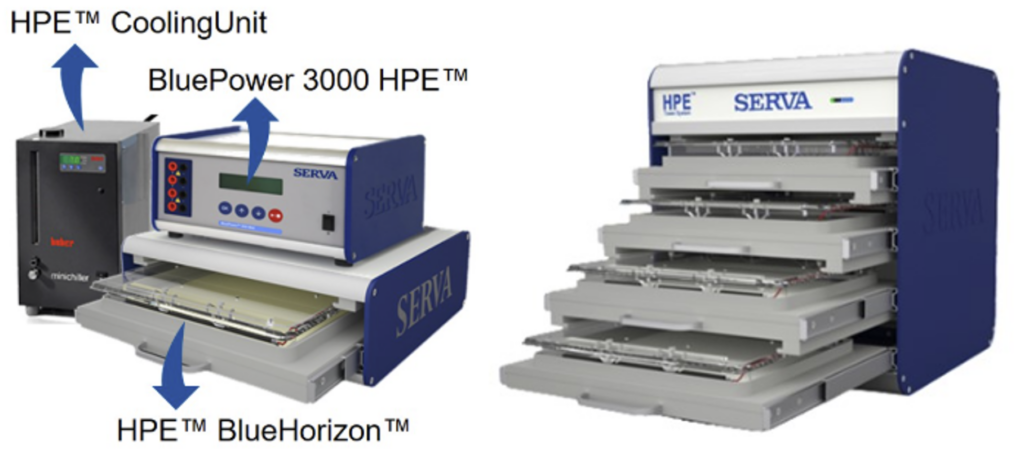
The BlueHorizon™ delivers consistent, high-quality results due to direct gel cooling, which minimizes artifacts. It also uses minimal electrophoresis buffer. For regulated environments, IQ/OQ/PQ qualifications are available. Up to four units can be stacked for simultaneous operation, increasing throughput. Be sure to explore Serva’s automated staining solutions as well.

For optimal performance, the HPE™ BlueHorizon™ requires a compatible power supply and chiller (contact us for details). 

Contact us for a quote and more information >>


Free Flow Electrophoresis

Free Flow Electrophoresis (FFE) represents a special technology. In contrast to conventional electrophoresis, which uses a gel matrix, FFE uses a free-flowing medium without a sieving effect to separate charged particles.

Complex samples are separated in a continuous process, allowing for high throughput. The separation occurs in a flowing liquid, minimizing damage to sensitive biomolecules. FFE can be adapted to separate various types of molecules, including proteins, cells, and even nanoparticles.  

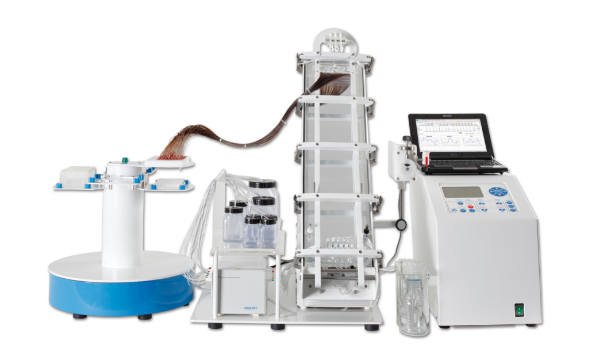
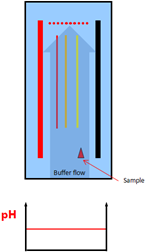
Free Flow Electrophoresis (FFE) is a versatile, carrier-free liquid separation technology. It uses two parallel plates to create a thin separation chamber (0.175-0.4mm gap). Sample and buffers are pumped in, and under laminar flow, an electric field perpendicular to the flow deflects charged particles (proteins, peptides, organelles, membrane fragments, or cells). This allows for separation and fractionation, with the separated fractions collected in 96-well microplates.

FFE System >>


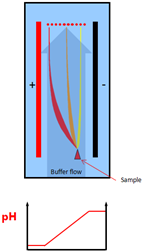
FFE – Isoelectric focusing (IEF) is a continuous separation technique that separates proteins and peptides based on their isoelectric points (pI). A stable pH gradient, created using ampholytes or SERVALYT™ reagents within the separation chamber, forms within 10-15 minutes. The sample is then continuously introduced into the laminar flow of buffers. As analytes migrate through the chamber, they focus at their respective pIs. Separated fractions are collected at the chamber’s outlet into microtiter or deep well plates. This continuous process allows for both analytical and preparative scale separations (up to 2 mg/hour). The pH gradient can be tailored to specific needs, from wide (e.g., pH 3-10) to narrow (e.g., pH 6-7) ranges, enabling high-resolution separation of complex protein mixtures. IEF can be performed under native or denaturing conditions.

Isoelectric focusing is used mainly for the separation of proteins and peptides.

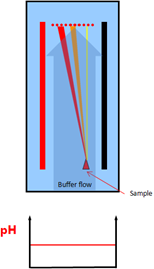
FEE – Zone electrophoresis (ZE) is a continuous separation technique that separates molecules based on differences in their net electrical charge. A buffer with a constant, pre-determined pH is used, optimized for the specific analytes of interest. The sample is continuously introduced into a laminar flow of this buffer within the separation chamber. As the analytes pass through an electric field applied across the chamber, they are deflected towards the anode (for negatively charged particles) or cathode (for positively charged particles). The degree of deflection is directly proportional to the magnitude of the net charge on the molecule; highly charged molecules experience greater deflection. At the end of the separation chamber, the now-separated analytes reach fractionation outlets where they are collected, typically into microtiter or deep well plates. Unlike isoelectric focusing, zone electrophoresis is a non-focusing technique, meaning the analytes do not concentrate at a specific point. It is commonly employed for the separation of larger particles such as organelles, cells, and other biological particles.

Interval Zone electrophoresis (iZE) is a novel high-resolution separation technique that separates molecules based on differences in their net electrical charge. Unlike continuous flow methods, iZE operates in a batch mode. The sample is introduced into a laminar flow of buffer within the separation chamber, and then a high voltage is applied. The buffer flow is then slowed, allowing the analytes to migrate and separate as they move through the electric field. The degree of deflection of each analyte is proportional to its net charge; highly charged molecules are deflected more significantly. Once the separated sample reaches the end of the chamber, the high voltage is turned off, and the separated fractions are eluted from the cell. The entire process can be automated using a robotic system, enabling efficient repetition of individual runs. iZE is particularly well-suited for the high-resolution separation of a wide range of biological entities, including organelles, particles, membrane proteins, protein complexes, proteins, and even protein isoforms.

Free Flow electrophoresis (FFE) is a versatile, powerful technique for the separation and analysis of proteins, peptides and nucleic acids in a liquid medium under the influence of an electric field. It offers several advantages over gel-based electrophoresis, especially for the separation of complex mixtures and large volumes.

From protein isoforms (including monoclonal antibodies and glycoproteins) and protein complexes to cell organelles (mitochondria, peroxisomes), subcellular compartments (ribosomes, vesicles, exosomes), and even whole cells, Free Flow Electrophoresis (FFE) offers unparalleled versatility in separating complex biological samples. Its continuous and native separation method ensures high throughput (up to 100ml/hour) while maintaining protein function for subsequent analysis. This combination of high capacity and gentle conditions makes FFE ideal for diverse applications, including the analysis of highly complex mixtures like snake venom.

Examples include

  • Proteomes from diverse sources (human tissue, body fluids, E. coli, yeast, even food samples)
  • Protein isoforms (like glycoprotein antibodies)
  • Membranes from various cell types (human, erythrocytes, lymphocytes, plant, bacterial)
  • Cells (bone marrow cells, leukocytes, blood cells, spermatozoa, parasites)
  • Organelles (melanosomes, lysosomes, mitochondria)
  • Miscellaneous compounds (chiral organics, liposomes, peptide hormones, ions, amphoteric substances)

Contact us to understand how FFE can solve your separation problems

Partnering with TMBIO

If you are a manufacturer of innovative life science products seeking a dedicated and results-oriented partner in the Asia Pacific region, we invite you to explore collaboration opportunities with TMBIO.

Contact Us

We welcome inquiries from potential customers and partners. Please contact us to learn more about our product portfolio, distribution capabilities, and how we can support your scientific endeavors.